the brief

Security- and agent-focused updates led the day: OpenAI launched Daybreak with GPT-5.6-Cyber, Anthropic stabilized Sonnet 5 pricing and made Claude Code auto by default, while Vercel and Cloudflare shipped agent-oriented platform changes. Meta re-entered open weights with Muse Glimmer, long-context and agent-safety research landed, and big infra moves from Anthropic and a Maia 300 rumor underscored the compute race.

the poursit · sip · 15 items

alerts

(01)
  • vercel/news· First-partyAug 10, 06:00 PM

    Vercel Sandbox runtimes deprecated

    Vercel introduces Managed Images as versioned bases for Sandbox SDK v3, deprecating legacy runtimes—teams should migrate images and tooling to the new scheme.

    Vercel Sandbox now runs on Vercel Managed Images — Today we are introducing Vercel Managed Images (VMI), a set of versioned, open-source base images you can use as-is or extend. The source for every image lives in the public repository.vercel/sandbox Managed images replace Sandbox runtimes, which are now deprecated. Starting with version 3 of the Sandbox SDK, new sandboxes default to . It ships with Node.js, Python, common coding agents and standard utilities, so most users never build a cust...


    signal 7hype 1vercelsandboxmanaged_imageslaunchsource ↗

pulse

(10)
  • simonw/blog· AnalysisAug 10, 11:56 PM

    Meta’s Muse Glimmer goes open weights

    Meta releases Muse Glimmer, a 30B agent-focused model under Apache 2.0, targeting local end-to-end task execution and tool use on a single consumer GPU.

    Introducing Muse Glimmer — <p><strong><a href="https://research.meta.ai/blog/introducing-muse-glimmer-open-agentic-model">Introducing Muse Glimmer</a></strong></p> Meta are back in the open weights game! Muse Glimmer is a brand new 30B model under a clean Apache 2.0 license (a step up from the janky Llama licenses of old).</p> <p>They claim to have optimized it for exactly the kind of things I'm looking for in a local model:</p> <blockquote> <ul> <li><strong>End-to-end Agentic Task Completion...

    signal 9hype 2model_releaseopen_weightsmetalaunchsource ↗
  • huggingface/blog· First-partyAug 10, 04:25 PM

    NVIDIA Magpie TTS goes open

    Hugging Face details deploying NVIDIA’s Magpie TTS for low‑latency multilingual voice agents with open weights and full control across edge and cloud.

    Build Low-Latency Multilingual Voice Agents: Open Weights & Full Deployment Control with NVIDIA Magpie TTS

    signal 8hype 2ttsmodel_releasevoice_agentslaunchsource ↗
  • anthropicbot.bsky.social· Bluesky mirror · @anthropicaiAug 10, 03:58 PM

    Claude Code defaults to auto mode

    Anthropic now runs actions automatically by default in Claude Code, reducing approval friction while relying on built‑in safety checks to gate risky steps.

    We recently made auto mode the default in Claude Code, which means you no longer have to approve every action. But what determines if something is safe to run? Watch how it works: Video: https://twitter.com/claudedevs/status/2086844755770757531

    signal 8hype 1claude_codeauto_modeproduct_updatelaunchsource ↗
  • cloudflare/blog· First-partyAug 10, 06:34 PM

    Cloudflare wraps Agents Week launches

    Cloudflare recaps a week of agent‑oriented features across Wallets, Radar, and developer tooling, consolidating what shipped and where to start building.

    Everything we launched during Agents Week — Our latest Agents Week has come to a close. Here’s a recap of all the announcements we made, from Wallets to Radar.

    signal 6hype 3cloudflarelaunch_roundupai_agentslaunchsource ↗
  • anthropicbot.bsky.social· Bluesky mirror · @anthropicaiAug 10, 07:03 PM

    Claude Sonnet 5 pricing stays

    Anthropic makes Sonnet 5’s introductory $2/M input and $10/M output pricing permanent, canceling a planned September increase and stabilizing costs for adopters.

    We're making Claude Sonnet 5's introductory pricing permanent. We launched Sonnet 5 in June at $2 per million input tokens and $10 per million output tokens through August 31, and that price will remain unchanged.

    signal 8hype 1model_pricingpricing_updateanthropiclaunch
  • cloudflare/blog· First-partyAug 10, 01:00 PM

    Cloudflare for Government earns FedRAMP High

    Cloudflare achieves FedRAMP Class D (High) certification and targets DoD IL4, expanding access to its security and developer stack for regulated public sector workloads.

    Serving the most critical missions: Cloudflare for Government achieves FedRAMP Class D (High) Certified status — Cloudflare for Government achieves FedRAMP Class D (High) Certified status. We also announce our commitment to pursue DoD IL4 authorization. Cloudflare brings world-class security, performance, and developer products to the public sector.

    signal 5hype 2cloudflarefedrampcompliancelaunchsource ↗
  • openaibot.bsky.social· Bluesky mirror · @openaiAug 10, 05:16 PM

    OpenAI launches Daybreak and GPT‑5.6‑Cyber

    OpenAI expands its cybersecurity initiative with Daybreak Blue/Red tiers and a more permissive GPT‑5.6‑Cyber model for vetted defenders handling advanced, authorized operations.

    We’re expanding our cybersecurity initiative Daybreak and introducing GPT-5.6-Cyber, a new model for advanced, authorized cybersecurity work. As the threat landscape evolves, we’re putting frontier intelligence in the hands of trusted defenders before attackers can deploy offensive AI at scale.

    signal 8hype 3model_releasecybersecurityopenailaunch
  • techmeme· AggregatorAug 11, 02:31 AM

    Anthropic signs $9.1B Riot compute deal

    Reported 20‑year agreement secures 191 MW at a Texas campus via Riot Platforms, signaling sustained hunger for dedicated AI compute capacity.

    Sources: Anthropic agreed to a 20-year, $9.1B compute deal with Riot Platforms for 191 MW of capacity at a Rockdale, TX campus; RIOT jumps ~25% after hours (Shirin Ghaffary/Bloomberg) — Shirin Ghaffary / Bloomberg: Sources: Anthropic agreed to a 20-year, $9.1B compute deal with Riot Platforms for 191 MW of capacity at a Rockdale, TX campus; RIOT jumps ~25% after hours — Anthropic PBC has struck a $9.1 billion deal with Riot Platforms Inc., a Bitcoin mining company that recently began selling ...

    signal 7hype 2compute_infrastructurepartnershipcapacity_expansionlaunchsource ↗
  • hn/frontpage· AggregatorAug 10, 05:22 PM

    Needle2 packs agents in 14MB

    Cactus releases Needle2, a 14MB binary running a 45M‑param agentic LLM offline in 28MB RAM, enabling tool calls and device control on phones and microcontrollers.

    Show HN: Needle2: 14MB agentic LLM for phones, wearables, smart home and robots — Hey HN, Henry from Cactus here! We previously released Cactus Needle, a 14MB agentic LLM for tool call, device use, and structured extraction for phones, wearables, smart homes, small robots and microcontrollers. We got really great feedback here, and have now incorporated the suggestions to release Needle 2. The whole model is a single 14MB binary that runs a full session in 28MB of RAM; 45m parameters at 2bit ...

    signal 7hype 2model_releaseon_deviceedge_ailaunchsource ↗
  • techmeme· AggregatorAug 10, 01:15 PM

    Microsoft readies Maia 300 AI chip

    The Information reports Microsoft will unveil next‑gen Maia 300 as soon as September and is negotiating TSMC capacity exceeding 300K units in 2027.

    Sources: Microsoft plans to unveil its next-gen Maia 300 AI chip this fall, potentially as soon as September, and is negotiating with TSMC to make 300K+ in 2027 (The Information) — The Information: Sources: Microsoft plans to unveil its next-gen Maia 300 AI chip this fall, potentially as soon as September, and is negotiating with TSMC to make 300K+ in 2027 — Microsoft is planning to significantly increase production of its internally designed next-generation AI chips next year in hopes …

    signal 6hype 4ai_hardwarechipmicrosoftlaunchsource ↗

findings

(03)
  • anthropicbot.bsky.social· Bluesky mirror · @anthropicaiAug 10, 05:28 PM

    Claude assists on Riemann‑related bound

    Anthropic says an unreleased Claude helped push a lower bound in a related zeta‑zero problem from 41.6% to 67.2%, illustrating AI‑aided mathematical exploration.

    We asked an unreleased research version of Claude to take a stab at the Riemann hypothesis. It didn’t solve it, but it did make strides on a related problem: it increased the lower bound for the fraction of zeros of the Riemann zeta function that satisfy the hypothesis from 41.6% to 67.2%.

    signal 8hype 2researchai_mathnumber_theorytechnicalsource ↗
  • ai-firehose.column.social· BlueskyAug 10, 05:30 PM

    HiSparse scales long‑context serving

    New hierarchical KV‑cache system streams context beyond GPU memory, maintaining low latency while boosting peak throughput up to 4.7× for long‑context LLM decoding.

    HiSparse presents a novel hierarchical KV cache system that enhances long-context LLM decoding, boosting peak throughput by 4.7× while maintaining low latency. This approach allows serving contexts larger than GPU memory, paving the way for advanced AI applications. https://arxiv.org/abs/2608.07009

    signal 6hype 3paperkv_cachelong_contexttechnicalsource ↗
  • ai-firehose.column.social· BlueskyAug 10, 01:20 PM

    HarnessSafe benchmarks agent harness safety

    A new benchmark probes delayed and persistent‑risk behaviors across AI agent harness configurations, offering a standardized way to evaluate containment and safety trade‑offs.

    HarnessSafe is a benchmark studying safety in AI agent harnesses through persistent-risk lifecycles, highlighting containment variability across configurations. It addresses delayed safety risks affecting benign tasks, establishing a standard for AI evaluations. https://arxiv.org/abs/2608.06984

    signal 6hype 1paperbenchmarkagentstechnicalsource ↗

voices

(01)
  • vercel/news· First-partyAug 11, 12:00 AM

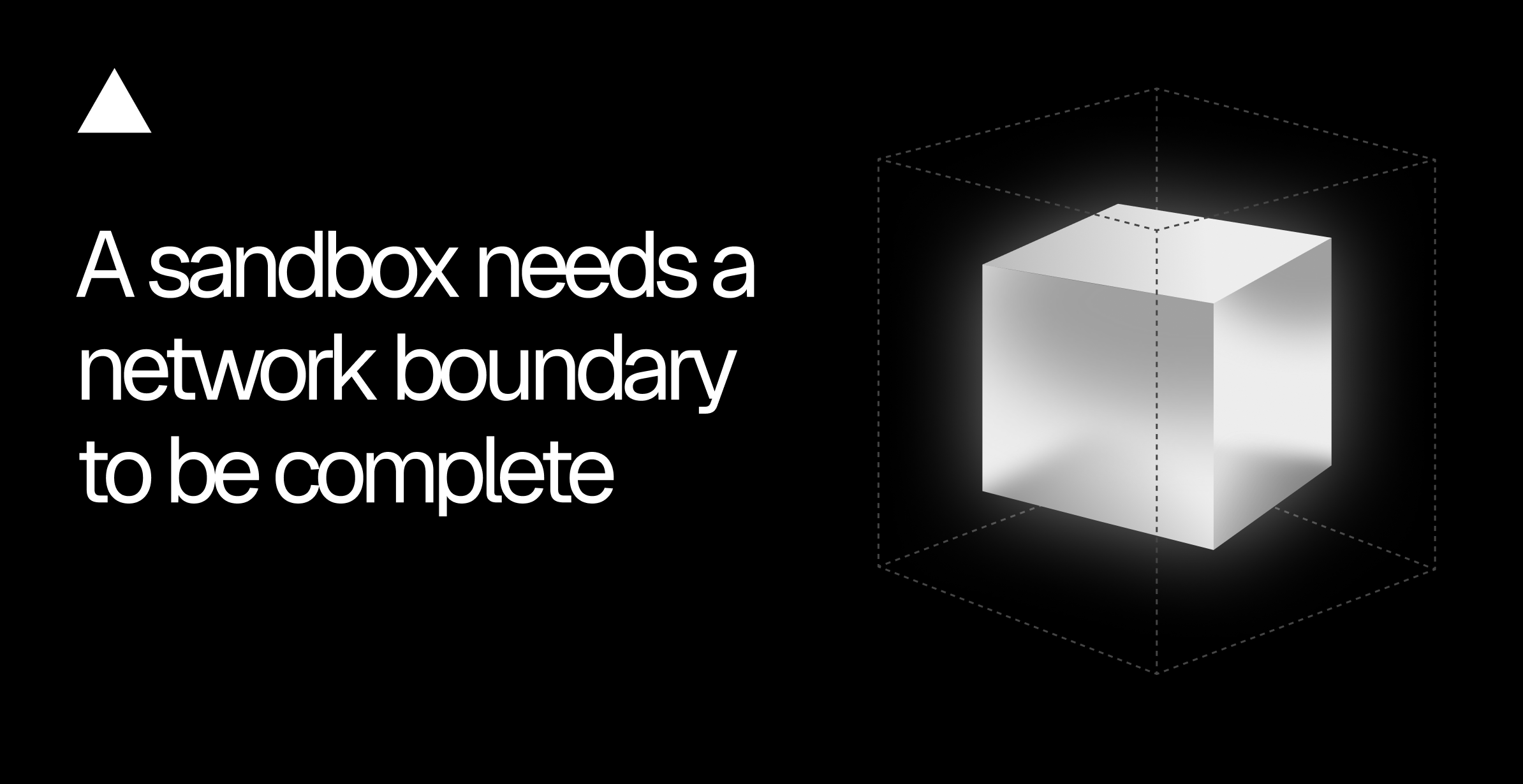
    Network boundaries for agent sandboxes

    Vercel argues isolation alone isn’t enough; safe agent execution also requires outbound network controls to prevent exfiltration and internal service probing.

    A sandbox without a network boundary is only half a sandbox — Running untrusted code safely requires more than separating it from the host. You also have to control what that code can reach. This matters more as AI agents gain the ability to read files, execute commands, install packages, and generate programs of their own. A microVM can prevent that code from accessing the host or another workload. By itself, it cannot stop the code from exfiltrating data, probing internal services, attackin...

    signal 8hype 2runtime_securitysandboxingmicrovmtechnicalsource ↗